
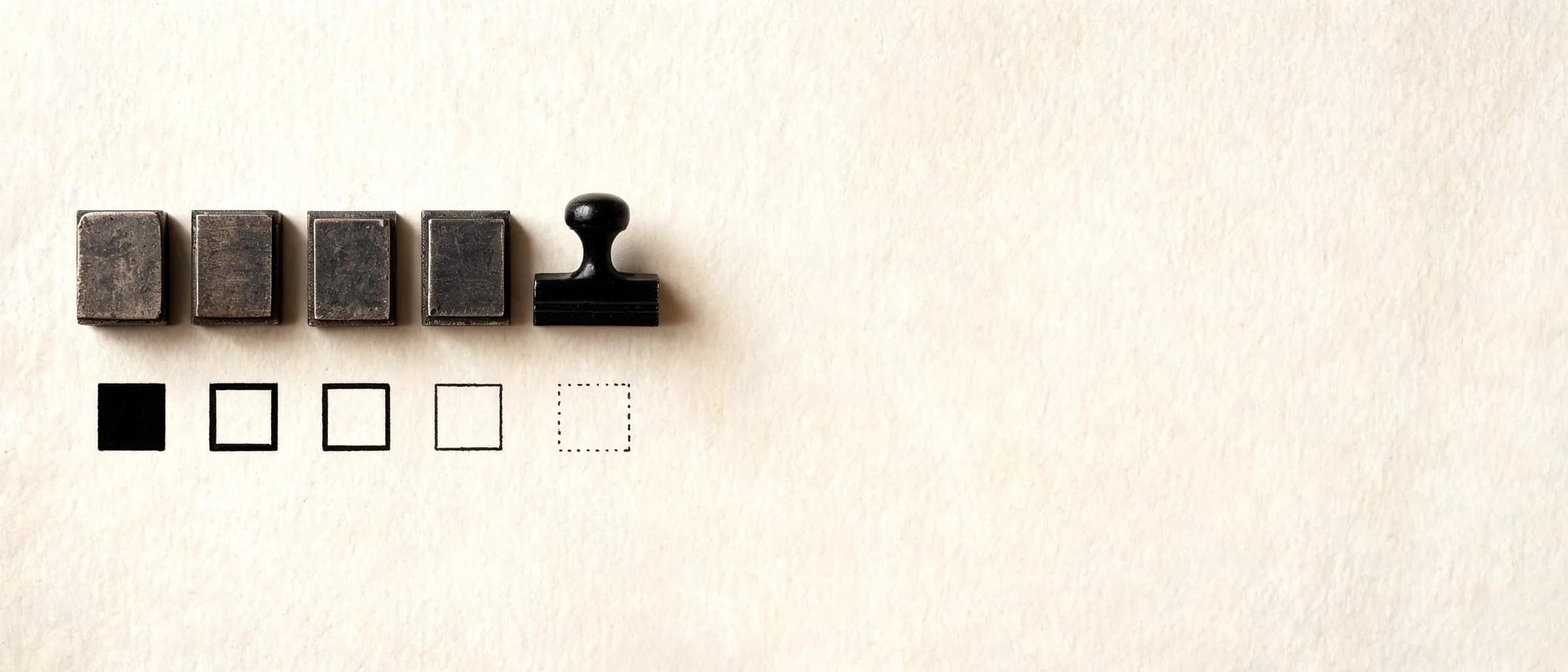
What the small squares mean
Every claim here carries a square with a letter in it. The darker the square, the stronger the evidence. Thirty seconds to learn, and it changes how every health headline reads.
Every claim in this publication carries a small square with a letter in it. The letter is how strong the evidence is — not how big the effect is, and not how often the claim is repeated. The darker and heavier the square, the stronger the evidence.
- A
- Several independent syntheses agree; high-to-moderate GRADE certainty
- B
- One good meta-analysis, or consistent randomised trials; moderate certainty
- C
- Observational or mechanistic evidence only; low certainty
- D
- Weak, contradicted, or without controlled human evidence
- A grade carrying this mark is evidence of absence: trials looked and found nothing. It is not the same as an untested claim, and the two are never merged into “no evidence”.
The one mark that matters most
A second square with ∅ in it means: good trials looked for the effect, and it was not there.
- Moderate evidence · tested: no effect
“Green tea reduces inflammation”
38 randomised trials: oxidative stress markers improved, CRP moved +0.01 mg/L · PMID 40160899
- DVery weak or untested
“Nightshades trigger joint inflammation”
No human trial, review or meta-analysis testing removal exists in either direction · searched 2026-09-02
Both are usually filed under “no evidence”. They are opposites. The first is a finding — someone checked, and it did nothing. The second is ignorance — nobody has checked. Every claim in the full audit states which of the two it is.